OGVI Research Lab
Jun 22, 2026
Organizations generate enormous amounts of operational knowledge, but very little of it becomes usable intelligence. Information remains fragmented across systems, workflows, documents, and teams, making it difficult for organizations to understand, coordinate, and improve their own operations.The Lab explores the systems required to transform a company’s existing artifacts into shared intelligence. Our work focuses on the connective layer between people, software, and operations that enables organizations to learn from experience, coordinate across complexity, and continuously improve over time.
Our research is informed by real-world deployment. Through building SnapWrite.ai, we observed the same pattern across organizations: the challenge was rarely an individual system. The challenge was the information, context, and decisions that existed between them. These observations continue to shape our work on organizational intelligence and self-improving systems.




Company Intelligence
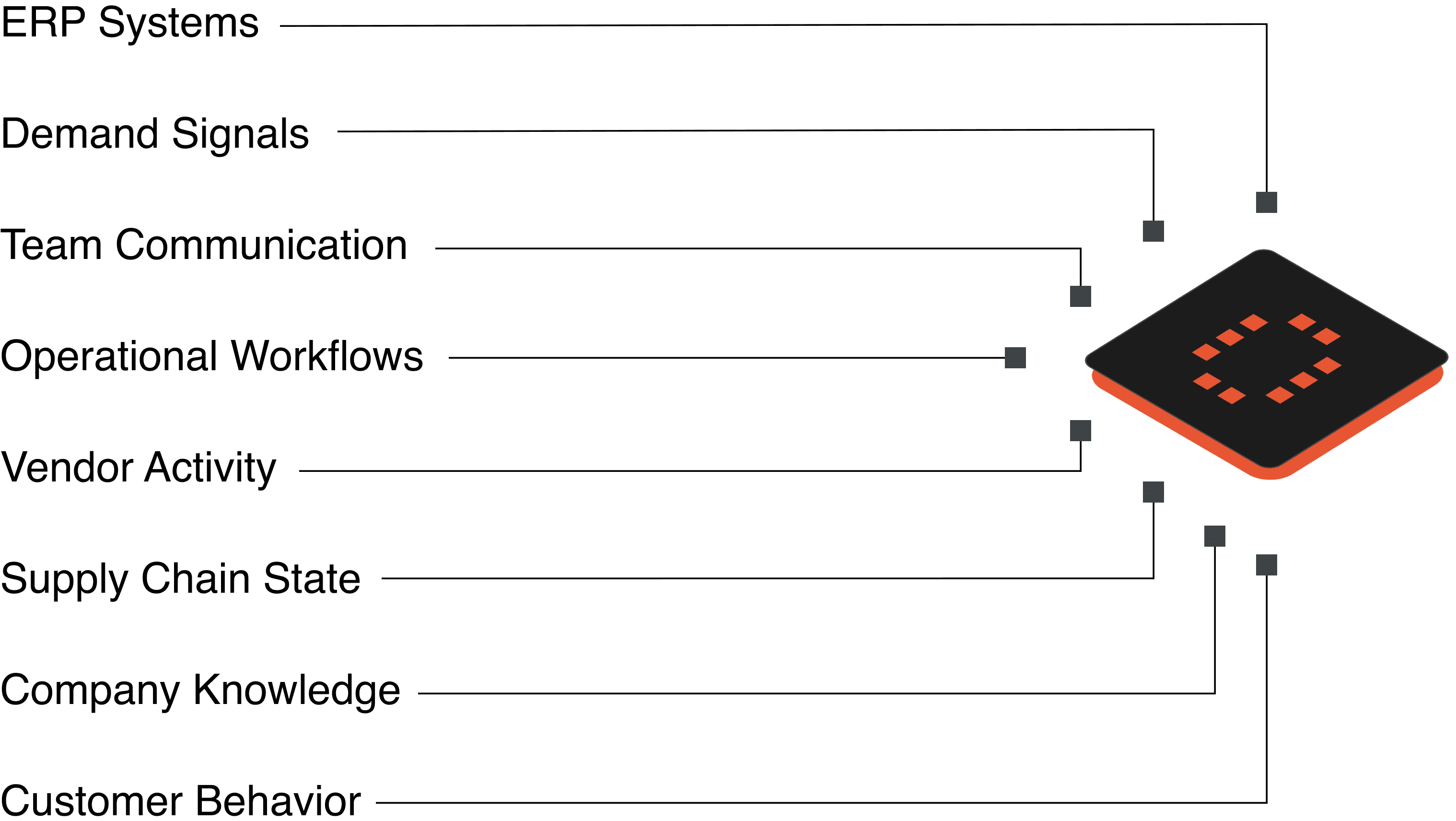
Organizations generate vast amounts of information every day, yet very little of it becomes shared intelligence. Critical context remains fragmented across systems, workflows, documents, and teams, making it difficult to build a complete understanding of how the organization operates. We explore how operational knowledge can be connected, contextualized, and transformed into a shared layer of intelligence that helps organizations understand their own operations, make better decisions, and adapt more effectively over time.
Operational Coordination
Modern operations span dozens of systems, business processes, and teams. While individual systems may function well, coordination between them often remains manual, fragmented, and difficult to scale. Our work focuses on understanding how information, decisions, and actions can move seamlessly across operational environments, enabling organizations to coordinate work more effectively while reducing the friction created by disconnected systems.
Agentic Operations
We believe the next generation of software will participate in work rather than simply record it. Our research explores how intelligent systems can understand operational context, reason across information distributed throughout the organization, and assist teams in carrying out meaningful tasks. We are particularly interested in how agentic systems can operate within real organizational environments while remaining reliable, adaptable, and aligned with human objectives.
Closed-Loop Systems
Organizations generate feedback through every decision, action, and outcome. Yet much of this information is never captured in a way that improves future operations. We explore how operational signals can be continuously incorporated into organizational intelligence, enabling systems that learn from experience, preserve context, and improve over time. Our long-term interest is understanding how organizations can evolve from fragmented, open-loop operations into continuously learning systems.