What Is a Freight Forwarder?
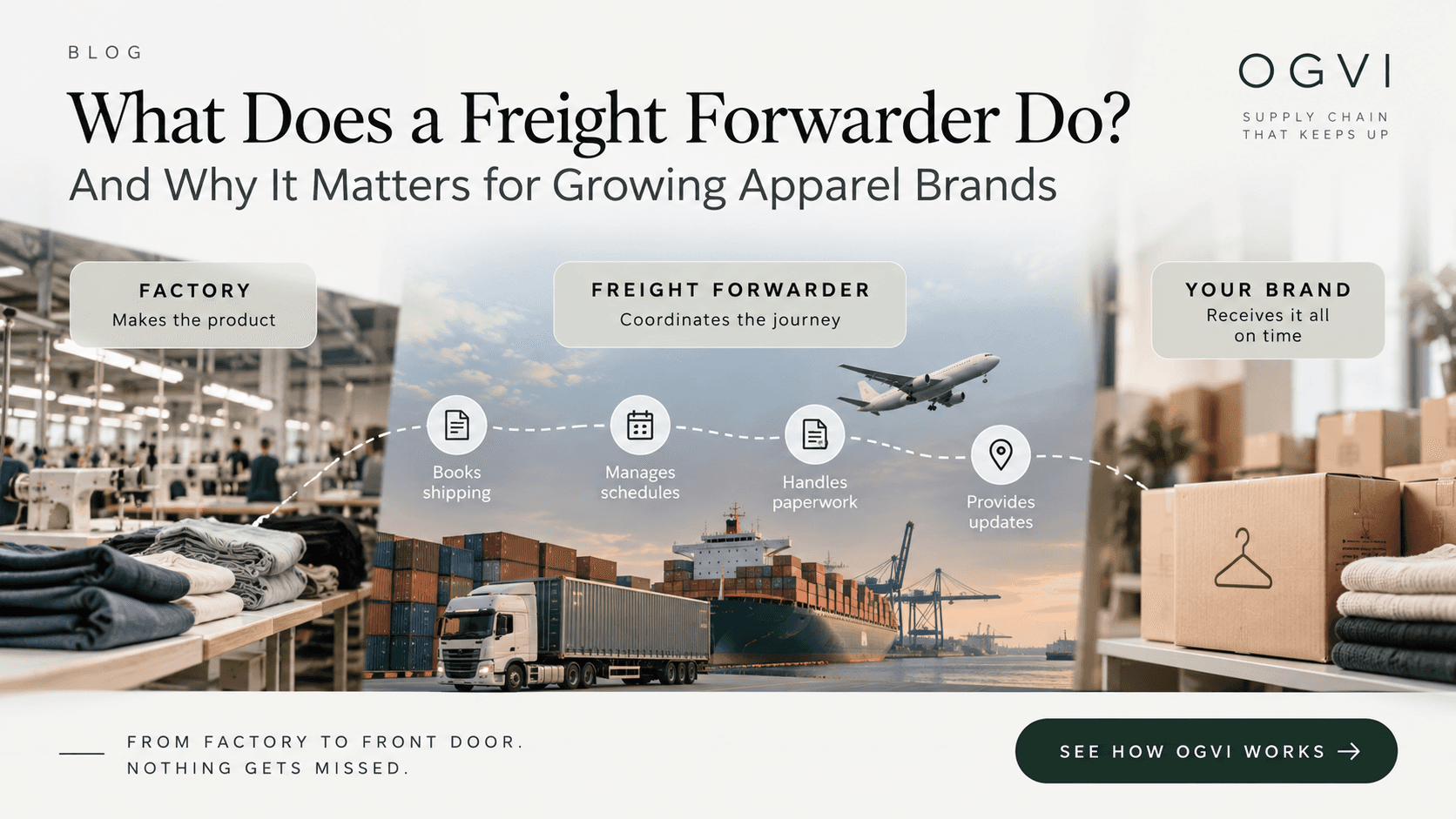
A freight forwarder is a company that moves your goods from the factory to wherever they need to end up, without owning the ships, planes, or trucks themselves. Think of them as the coordinator standing in the middle. The factory makes the product. The freight forwarder books the space on a ship or plane, handles the paperwork, and manages the trip. Your brand is on the other end, waiting for it all to show up correctly.
How Is a Freight Forwarder Different From a Factory?
The factory's job ends once the product is made and ready to leave the building. The freight forwarder's job starts there. A factory is focused on production, not on shipping schedules or customs paperwork, and that's exactly why freight forwarders exist. Here's something we didn't fully appreciate until we sat inside these workflows ourselves: once a shipment is moving, the factory is often not your best source of information anymore. If a shipment runs behind, or a factory goes quiet for a few days, the freight forwarder is usually still watching that shipment closely. We've seen supply chain teams reach out to the freight forwarder instead of the factory to get the final documents, the bill of lading, the commercial invoice, the packing list, simply because the freight forwarder was the one still paying attention.
What Does a Freight Forwarder Actually Do?
Day to day, a freight forwarder is responsible for a few specific things:
a) Booking the container or cargo space once an order is ready to ship. b) Confirming the shipping schedule with the actual carrier, meaning the ship or plane line itself. c) Sending a draft version of the shipping documents before the shipment leaves. d) Sending the final version once it's actually departed. e) Stepping in with updates or paperwork when the factory can't.
Does a Freight Forwarder Ever Replace the Factory as Your Point of Contact?
Not officially, but in practice, yes, often. For a company managing thousands of purchase orders a year, one factory relationship can involve several freight forwarders, and it's common for a single company to work with seven or eight different freight forwarders at once, each handling a different piece of the puzzle. When something goes quiet on the factory side, the freight forwarder frequently becomes the more reliable contact simply because shipping is their entire job, not a side task.
Why Does This Matter for a Growing Apparel Brand?
Because the math changes fast. One freight forwarder relationship is easy to manage by memory. Multiply that across twenty or thirty factories, and keeping track of who has which document, and who to follow up with when something's missing, becomes its own full-time job. This is one of the quiet reasons manual supply chain tracking breaks down as a company grows. A handful of emails works fine at a small scale. Once you're moving thousands of orders a year, relying on memory for who usually sends what starts to get risky. One missed email means a shipment update never makes it into your system, and your inventory numbers can drift away from reality for days before anyone notices.
For example, take a mid-market apparel importer running 25 to 30 factories overseas, placing somewhere between 3,000 and 5,000 purchase orders a year, and shipping into two different countries. That kind of company is often working with 7 or 8 different freight forwarders at once, not because they chose to spread the work out, but because different factories, different regions, and different shipping lines naturally end up routed through different partners. With a logistics team of maybe 6 or 7 people covering that volume, each person is realistically tracking dozens of open shipments at any given time, across multiple freight forwarders, with no single inbox that shows the whole picture at once.
That gap, a document sitting unread in someone's inbox while the rest of the business assumes it's already logged, is exactly the kind of thing we build tools to catch. Not by replacing the freight forwarder relationship, but by making sure nothing they send gets missed, no matter who happened to send it that week.
See How OGVI Keeps Nothing From Slipping Through
OGVI reads what your freight forwarders and factories send, whoever happens to send it, and matches it to the right order automatically, so a document never sits unread just because it landed in the wrong inbox that week. See how it works at ogvi.ai.